
Class Structure by Level
Home » Damansara Utama » Japanese Class Structure by Level
Class Levels
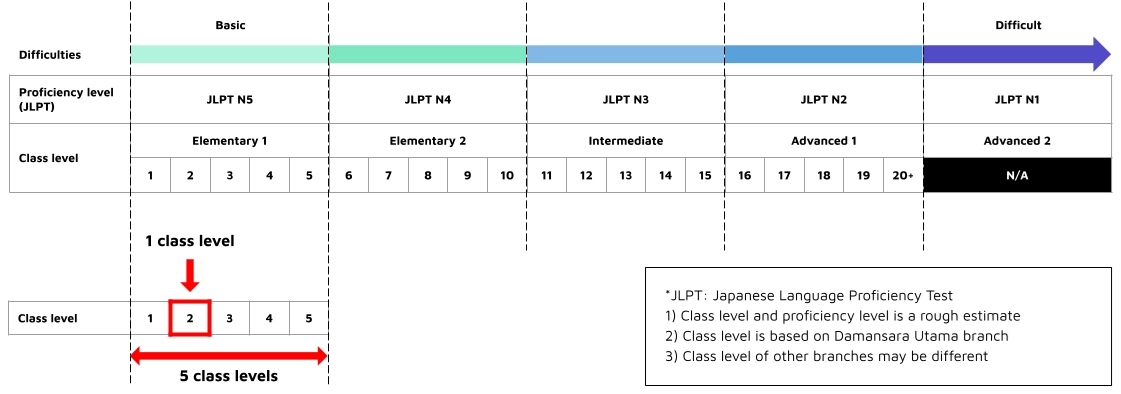
“Class levels” refer to the levels of our classes, while “JLPT levels” refer to Japanese language proficiency levels measured by the Japanese-Language Proficiency Test (JLPT).
The information above is provided by Damansara Utama HQ. Class levels may vary by branch, so please contact the respective branch directly for details. Contact Us
Textbooks
Level 1 - 5 (3 books)
-
みんなの日本語初級1 (第2版) - Minna no Nihongo Shokyu 1 (2nd Edition)ISBN 9784883196036
-
Minna no Nihongo Elementary 1-1 English Translation (2nd Edition)ISBN 9789675035166
-
Minna no Nihongo Elementary 1-2 English Translation (2nd Edition)ISBN 9789675035173
Level 6 - 10 (3 books)
-
みんなの日本語初級2 (第2版) - Minna no Nihongo Shokyu 2 (2nd Edition)ISBN 9784883196463
-
Minna no Nihongo Elementary 2-1 English Translation (2nd Edition)ISBN 9789675035203
-
Minna no Nihongo Elementary 2-2 English Translation (2nd Edition)ISBN 9789675035210
Level 11 - 15 (3 books)
-
TRY!日本語能力試験N3英語版(改訂版)- 文法から伸ばす日本語ISBN 9784866396668
-
日本語総まとめN3語彙(増補改訂版)-「日本語能力試験」対策ISBN 9784866395029
-
日本語総まとめN3漢字(増補改訂版)-「日本語能力試験」対策ISBN 9784866394961
Objective / 目標
- Read shop names, station names and menus in Hiragana.
- Simple self-introduction.
- Learn how to use numbers and answer simple questions related to time and prices.
- Ask questions and make questions about personal belongings.
- Understand the usage of past and future tense.
- ひらがなで書かれた店の名前、駅の名前、メニューなどが読める。
- かんたんな自己紹介ができる。
- 時間や値段など数字を使ったかんたんな受け答えができる。
- 身の回りの物の名前を聞いたり答えたりできる
- 過去/未来の時制の使い方が理解できる。
Level 1 Textbook: Minna No Nihongo『みんなの日本語初級Ⅰ』
- Lesson 1 – 5, Hiragana, Numbers
Objective / 目標
- Read shop names, station names and menus in Katakana.
- Describe daily activities.
- Decide the date, time and location and arrange appointments.
- Simple expression of thoughts on surrounding things and events.
- Make simple invitations and suggestions.
- カタカナで書かれた名前、メニューなどが読める。
- 一日の行動を説明することができる。
- 日時や場所などを決め、約束をすることができる。
- 身の回りのものやことの感想がかんたんに言える。
- かんたんな誘いや提案ができる
Level 2 Textbook: Minna No Nihongo『みんなの日本語初級Ⅰ』
- Lesson 6 – 10, Katakana
Objective / 目標
- Describe people, objects and places.
- Simple knowledge of sharing past experiences and opinions.
- Simple comparison of surrounding things and events.
- Describe likes or dislikes and things you want/want to do.
- Make simple requests and instructions.
- どの場所に何があるか、誰がいるかを説明することができる。
- 以前経験したことについて、かんたんな感想が言える
- 身の回りの物や出来事について、かんたんな比較ができる。
- 好き嫌いや、ほしいもの、したいことについて話すことができる。
- かんたんな依頼や指示ができる。
Level 3 Textbook: Minna no Nihongo『みんなの日本語初級Ⅰ』
- Lesson 11 – 15
Objective / 目標
- Give permission to or prohibit the acts of other parties.
- Tell the correct order of the events.
- Simple description about hobbies, interests and experience.
- Distinguish the difference between formal and casual expressions.
- Able to explain what must/need not be done.
- 相手の行為を許可したり、禁止したりすることができる。
- 出来事の順序を話すことができる。
- 趣味や経験について、かんたんに説明することができる。
- フォーマルな表現とカジュアルな表現の違いがわかる。
- しなければならないこと、しなくてもいいことについて話すことができる。
Level 4 Textbook: Minna no Nihongo『みんなの日本語初級Ⅰ』
- Lesson 16 – 20
Objective / 目標
- Able to describe own feelings and opinions.
- Distinguish the difference between formal and casual expressions.
- Slightly detailed description of surrounding things and events.
- Make assumptions and talk about about the future.
- Talk about things that have been done to and received from others.
- 自分の意見をかんたんに述べることができる。
- フォーマルな表現とカジュアルな表現の違いがわかる。
- 身の回りの物や出来事について、やや詳しく説明することができる。
- 将来のことを仮定して話すことができる。
- 誰かにしてあげたこと、してもらったことについて話すことができる。
Level 5 Textbook: Minna no Nihongo『みんなの日本語初級Ⅰ』
- Lesson 21 – 25
Objective / 目標
- Learn ways to express feelings more naturally.
- Describe skills or capabilities.
- A more detailed description of surrounding things and events.
- Express self-reflections and regrets.
- Talk about things to do in advance and future arrangements.
- より自然で感情のこもった話し方ができる
- 能力や可能なことについて話すことができる。
- 身の回りのものについて更に詳しく説明することができる。
- してしまったことへの反省や後悔の表現ができる。
- 事前にやっておくこと、事後に整理しておくことについて話すことができる。
Level 6 Textbook: Minna no Nihongo『みんなの日本語初級ⅠⅠ』
- Lesson 26 – 30
Objective / 目標
- Describe conditions and occasions.
- Provide advice to others.
- Understand instructions and restrictions using short phrases.
- State the conditions for future events to happen.
- Talk about future plans and events.
- 出来事が行われる条件について述べることができる。
- 相手にアドバイスすることができる。
- 短い言葉での命令や禁止の表現が理解できる。
- 出来事が行われる条件について述べることができる。
- 将来しようと思っていることや計画について話すことができる。
Level 7 Textbook: Minna no Nihongo『みんなの日本語初級ⅠⅠ』
- Lesson 31 – 35
Objective / 目標
- Explain the purpose of specific actions.
- Talk about things as the main subject of the conversation.
- Convey the condition of a particular situation.
- Expression of feelings and explaining the reasons.
- Explain speculations made based on a situation.
- 行為の目的を説明することができる。
- ものを主語にした表現方法ができる。
- 状況を正確に伝えることができる。
- 感情の表現と、その感情を持った理由について説明することができる。
- 状況から推測されることを説明できる。
Level 8 Textbook: Minna no Nihongo『みんなの日本語初級ⅠⅠ』
- Lesson 36 – 40
Objective / 目標
- Convey the information received from others.
- Expressing the purpose of specific tools.
- Describe items that you do know now the names of.
- Explain urgent situations.
- Describe the appearance of things and people.
- ほかの人から得た情報を伝えることができる。
- 道具の使用目的について説明することができる。
- 名前のわからないものについて説明をして推測させることができる。
- 緊急の場合についての説明ができる。
- どのようにみえるかを説明することができる。
Level 9 Textbook: Minna no Nihongo『みんなの日本語初級ⅠⅠ』
- Lesson 41 – 45
Objective / 目標
- Explain accurately what you are about to do at a certain time.
- Share what is being felt using the five senses.
- Convey the information received from others.
- Politely ask for permission to get something done.
- Correct usage of the honorific form when talking to superiors.
- 時間の流れの中で、今何をしているところなのかが説明できる。
- 五感から推測されることについて話すことができる。
- ほかの人から得た情報を伝えることができる。
- 何かをさせてもらうよう丁寧に許可を取ることができる。
- 上司や社外の人と話す場合の敬語表現が使い分けられる。
Level 10 Textbook: Minna no Nihongo『みんなの日本語初級ⅠⅠ』
- Lesson 46 – 50
Syllabus
Level 1 - 5 (Elementary 1 - Approx. JLPT N5)
Objective
- Read shop names, station names and menus in Hiragana.
- Simple self-introduction.
- Learn how to use numbers and answer simple questions related to time and prices.
- Ask questions and make questions about personal belongings.
- Understand the usage of past and future tense.
目標
- ひらがなで書かれた店の名前、駅の名前、メニューなどが読める。
- かんたんな自己紹介ができる。
- 時間や値段など数字を使ったかんたんな受け答えができる。
- 身の回りの物の名前を聞いたり答えたりできる
- 過去/未来の時制の使い方が理解できる。
Objective
- Read shop names, station names and menus in Katakana.
- Describe daily activities.
- Decide the date, time and location and arrange appointments.
- Simple expression of thoughts on surrounding things and events.
- Make simple invitations and suggestions.
目標
- カタカナで書かれた名前、メニューなどが読める。
- 一日の行動を説明することができる。
- 日時や場所などを決め、約束をすることができる。
- 身の回りのものやことの感想がかんたんに言える。
- かんたんな誘いや提案ができる
Objective
- Describe people, objects and places.
- Simple knowledge of sharing past experiences and opinions.
- Simple comparison of surrounding things and events.
- Describe likes or dislikes and things you want/want to do.
- Make simple requests and instructions.
目標
- どの場所に何があるか、誰がいるかを説明することができる。
- 以前経験したことについて、かんたんな感想が言える
- 身の回りの物や出来事について、かんたんな比較ができる。
- 好き嫌いや、ほしいもの、したいことについて話すことができる。
- かんたんな依頼や指示ができる。
Objective
- Give permission to or prohibit the acts of other parties.
- Tell the correct order of the events.
- Simple description about hobbies, interests and experience.
- Distinguish the difference between formal and casual expressions.
- Able to explain what must/need not be done.
目標
- 相手の行為を許可したり、禁止したりすることができる。
- 出来事の順序を話すことができる。
- 趣味や経験について、かんたんに説明することができる。
- フォーマルな表現とカジュアルな表現の違いがわかる。
- しなければならないこと、しなくてもいいことについて話すことができる。
Objective
- Able to describe own feelings and opinions.
- Distinguish the difference between formal and casual expressions.
- Slightly detailed description of surrounding things and events.
- Make assumptions and talk about about the future.
- Talk about things that have been done to and received from others.
目標
- 自分の意見をかんたんに述べることができる。
- フォーマルな表現とカジュアルな表現の違いがわかる。
- 身の回りの物や出来事について、やや詳しく説明することができる。
- 将来のことを仮定して話すことができる。
- 誰かにしてあげたこと、してもらったことについて話すことができる。
Level 6 - 10 (Elementary 2 - Approx. JLPT N4)
Objective
- Read shop names, station names and menus in Hiragana.
- Simple self-introduction.
- Learn how to use numbers and answer simple questions related to time and prices.
- Ask questions and make questions about personal belongings.
- Understand the usage of past and future tense.
目標
- ひらがなで書かれた店の名前、駅の名前、メニューなどが読める。
- かんたんな自己紹介ができる。
- 時間や値段など数字を使ったかんたんな受け答えができる。
- 身の回りの物の名前を聞いたり答えたりできる
- 過去/未来の時制の使い方が理解できる。
Objective
- Describe conditions and occasions.
- Provide advice to others.
- Understand instructions and restrictions using short phrases.
- State the conditions for future events to happen.
- Talk about future plans and events.
目標
- 出来事が行われる条件について述べることができる。
- 相手にアドバイスすることができる。
- 短い言葉での命令や禁止の表現が理解できる。
- 出来事が行われる条件について述べることができる。
- 将来しようと思っていることや計画について話すことができる。
Objective
- Explain the purpose of specific actions.
- Talk about things as the main subject of the conversation.
- Convey the condition of a particular situation.
- Expression of feelings and explaining the reasons.
- Explain speculations made based on a situation.
目標
- 行為の目的を説明することができる。
- ものを主語にした表現方法ができる。
- 状況を正確に伝えることができる。
- 感情の表現と、その感情を持った理由について説明することができる。
- 状況から推測されることを説明できる。
Objective
- Convey the information received from others.
- Expressing the purpose of specific tools.
- Describe items that you do know now the names of.
- Explain urgent situations.
- Describe the appearance of things and people.
目標
- ほかの人から得た情報を伝えることができる。
- 道具の使用目的について説明することができる。
- 名前のわからないものについて説明をして推測させることができる。
- 緊急の場合についての説明ができる。
- どのようにみえるかを説明することができる。
Objective
- Explain accurately what you are about to do at a certain time.
- Share what is being felt using the five senses.
- Convey the information received from others.
- Politely ask for permission to get something done.
- Correct usage of the honorific form when talking to superiors.
目標
- 時間の流れの中で、今何をしているところなのかが説明できる。
- 五感から推測されることについて話すことができる。
- ほかの人から得た情報を伝えることができる。
- 何かをさせてもらうよう丁寧に許可を取ることができる。
- 上司や社外の人と話す場合の敬語表現が使い分けられる。
Our Contacts
- 03-7728-4662 / (+60)16-628-4662
- admin@atozlanguage.com
- Monday – Friday: 10:00 – 21:30
- Saturday: 10:00 – 18:30
- Sunday & Public Holidays: Closed
Need assistance or have questions?
Q&A Corner
Japanese Language Class: Damansara Utama
General Section
I have never studied Japanese before, where should I start?
We suggest starting with Level 1, which is best for beginners to build a strong foundation.
I’ve studied Japanese before, how can I know which class to join?
Please contact the nearest branch to arrange a level check. If possible, bring your textbooks or study materials with you.
Do I need a level check?
A level check is a process our teacher uses to assess the Japanese language proficiency of individuals who have studied Japanese before joining our classes.
You will be required to take a level check if you:
- Studied Japanese through self-study
- Learned Japanese at another school or language centre
- Studied Japanese in the past but have since stopped
Please contact the nearest branch to arrange your level check.
What is class levels and JLPT levels.
The term ‘class levels’ refers to the different levels offered in our courses, while ‘JLPT levels’ indicate the proficiency of Japanese as measured by the JLPT exam. (Japanese Language Proficiency Test)
Do you provide student visa?
Japanese Language Proficiency Test (JLPT)
What is JLPT?
Japanese Language Proficiency Test. Please visit JLPT website for more information. https://www.jlpt.jp/e/about/index.html
How many levels are there in JLPT?
There are a total of 5 levels, N5 is the most basic level and N1 is the highest level.
When and how can I register for the JLPT exam?
Please check the JLSM website for information on how to register, including dates and deadlines. https://www.jlsm.org/
Payment & Refund
What payment methods do you accept?
Cash and online banking.
Can I pay in installment / pay monthly?
We don’t accept installment and monthly payment.
What information do I need to provide when making a payment?
Please provide the following information so we can identify your payment:
- The name of the student, or
- The phone number used to register with us, and
- Specify the class you’re paying for, or
- Any other information that can help us identify you.
What if the class is canceled because there aren’t enough students? Will I get a refund?
You will receive a full refund. There won’t be any handling charges in this case.